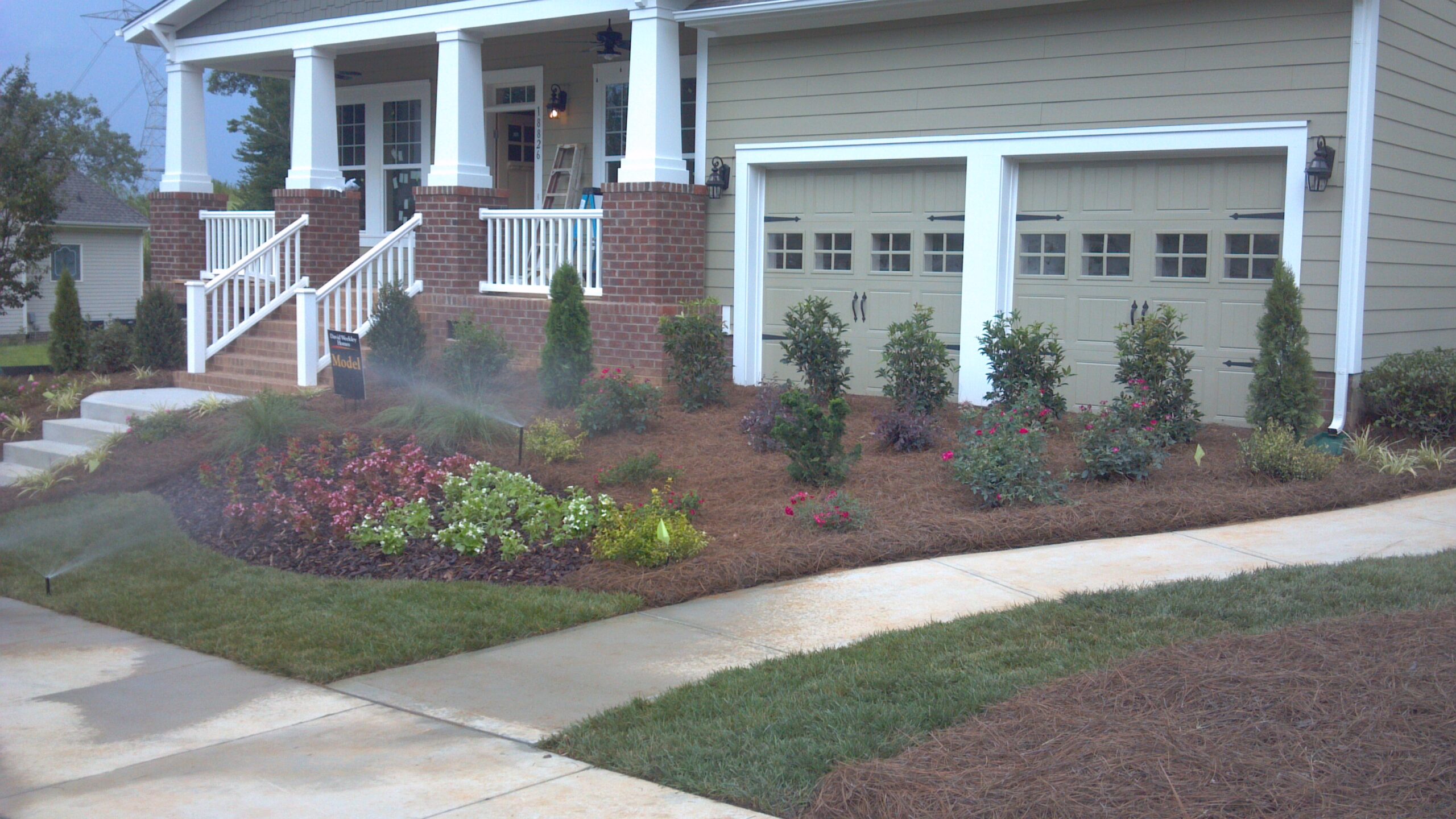
Watering That Matches What Your Yard Actually Needs
Charlotte summers find every weak spot in a landscape. The strip of grass near the street browns out first. The hydrangeas wilt by two in the afternoon even though you watered them Saturday. And somebody in the house always ends up dragging a hose around at seven in the morning before work.
Hyatt Landscaping has been installing irrigation systems in Charlotte, NC since 1980, and most of the calls we get sound a lot like that. A yard that looks great in May and struggles by August. A sprinkler system left behind by a previous owner that hits the driveway better than the turf. A homeowner who put real money into plantings and would rather not watch them cook through a three week dry stretch.

We handle the design, the permits, the meter coordination, and the installation. Our licensed contractors know what Charlotte and the surrounding municipalities require, so you are not the one reading ordinance language on a Tuesday night.
Irrigation Services for Charlotte Properties
Every property waters differently. A flat quarter acre lot in a newer subdivision has almost nothing in common with a wooded lot that slopes toward the back fence. We design around what is actually there, then install the zones and components that fit.
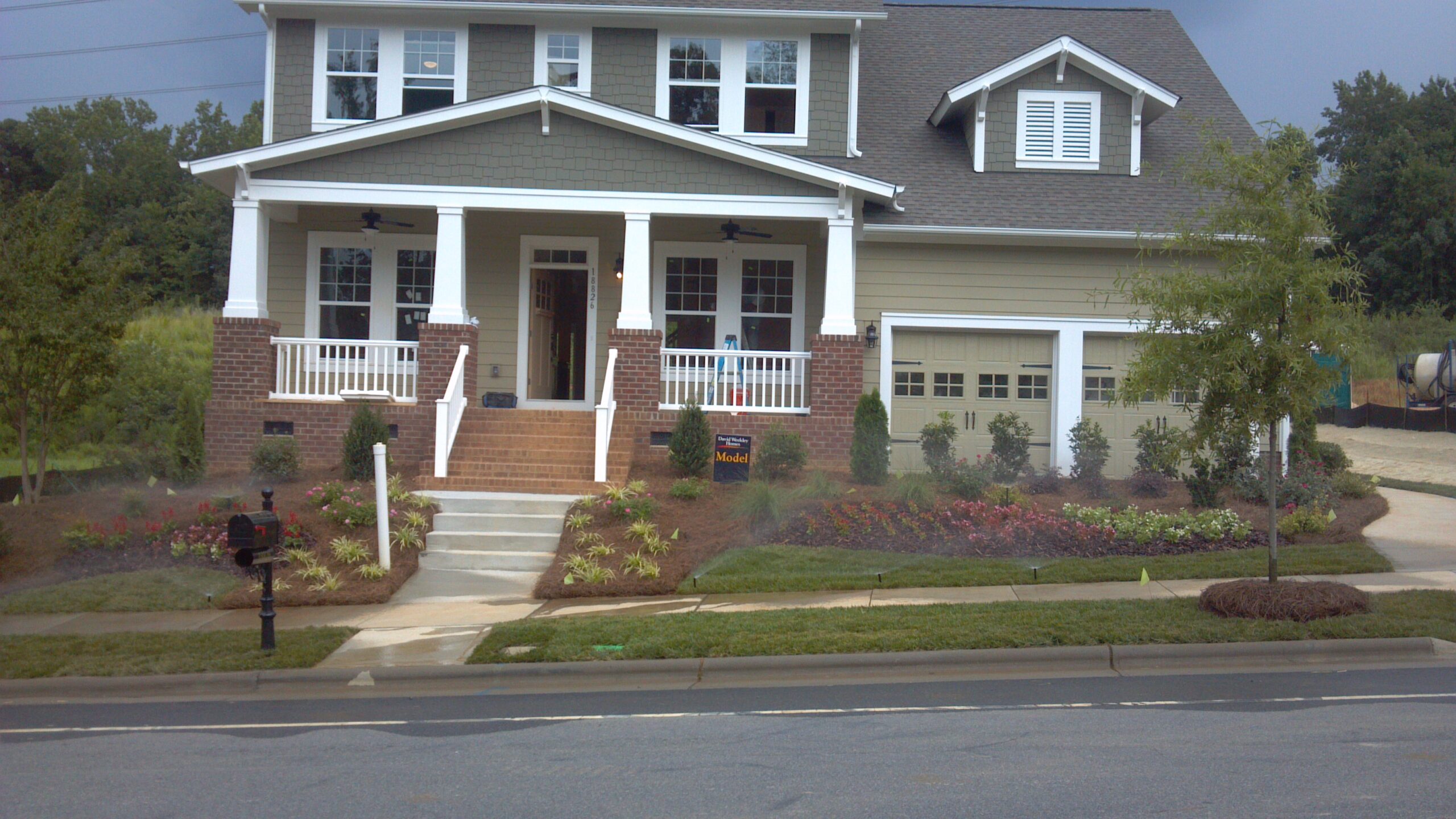
Most of the systems we build are a hybrid. Rotors and spray heads handle the lawn, drip lines handle the beds, and the two run on separate schedules because grass and shrubs want completely different things. Very few Charlotte properties are well served by one approach across the entire yard.
-
Turf Rotor Zones:
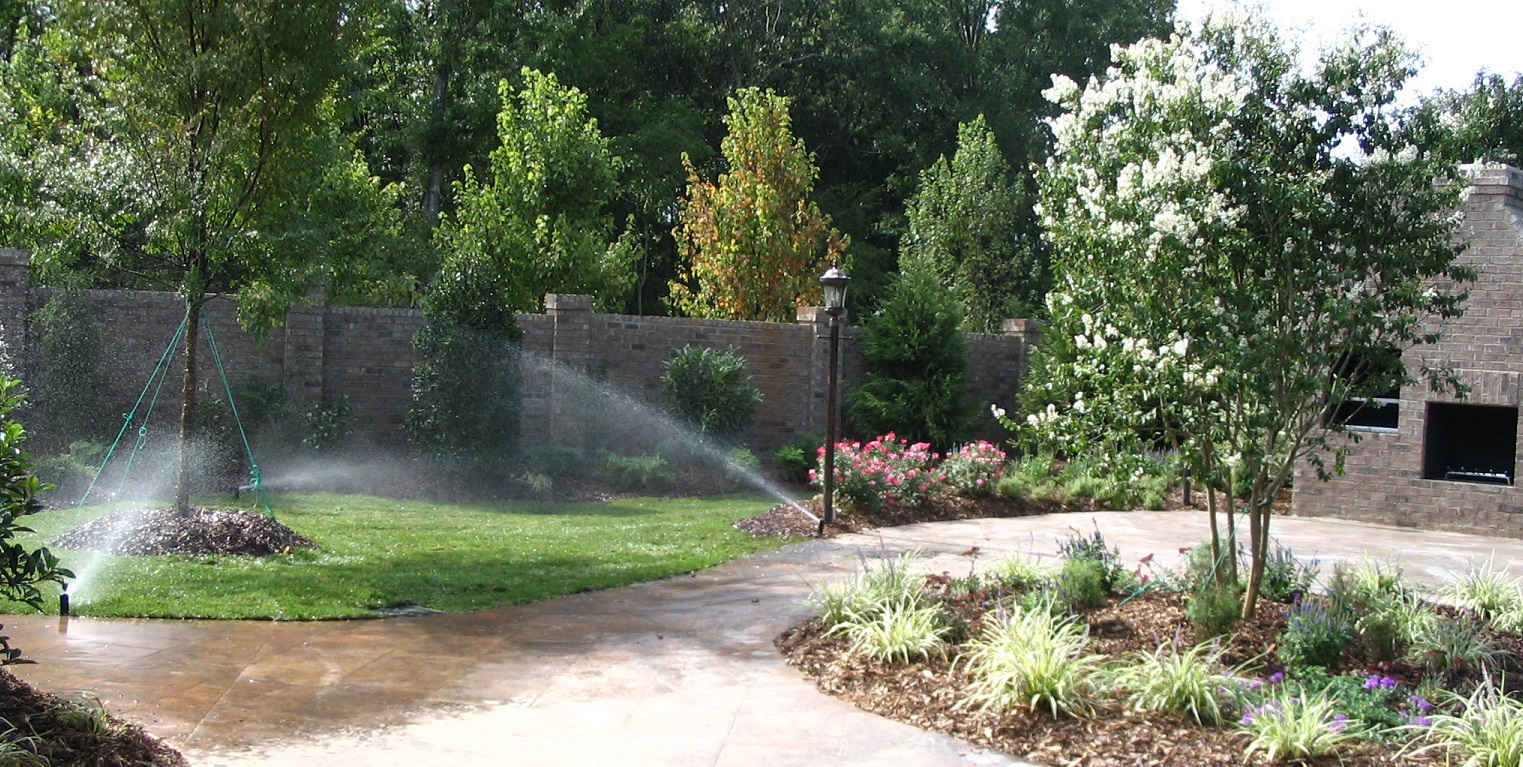
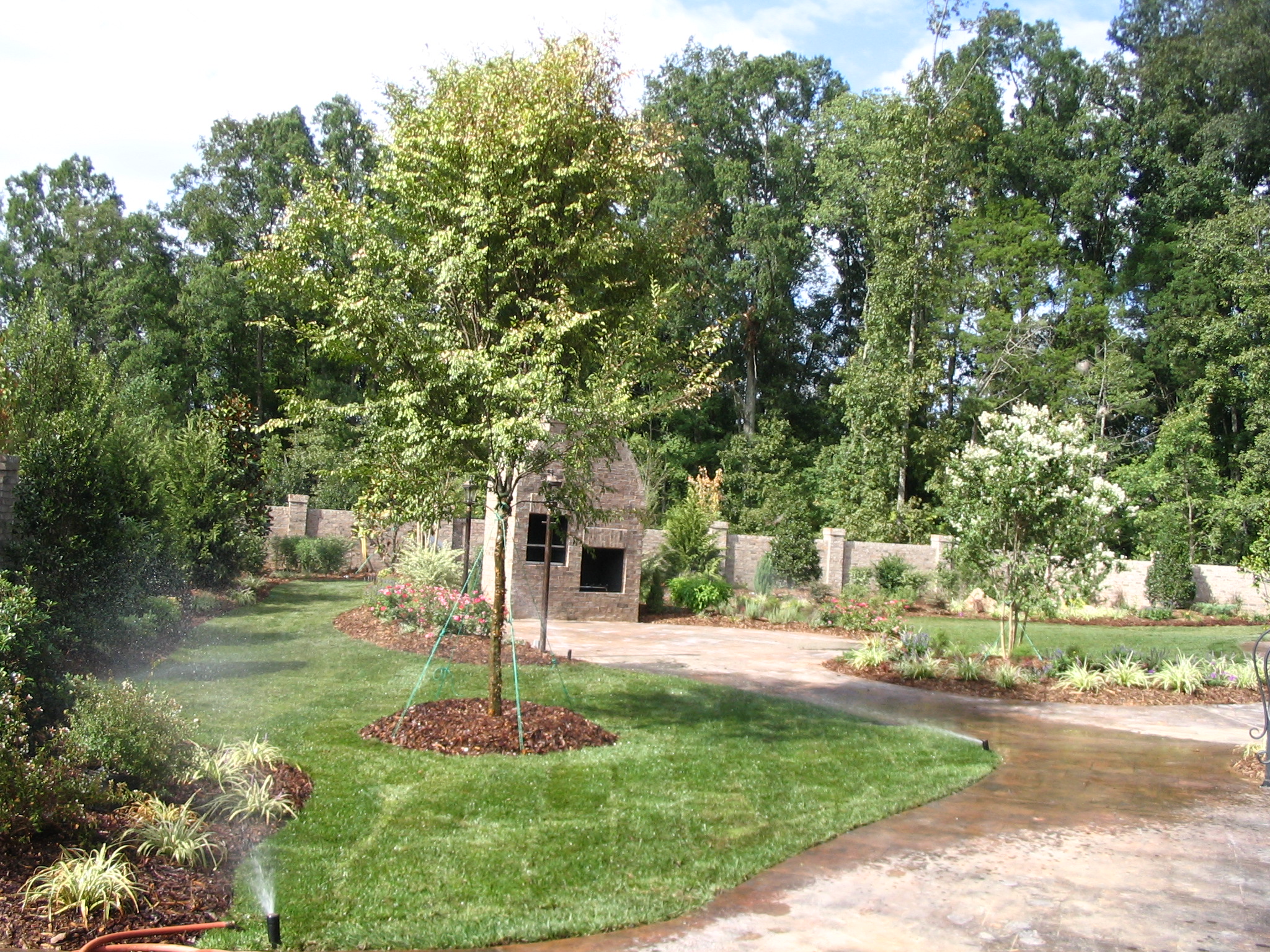
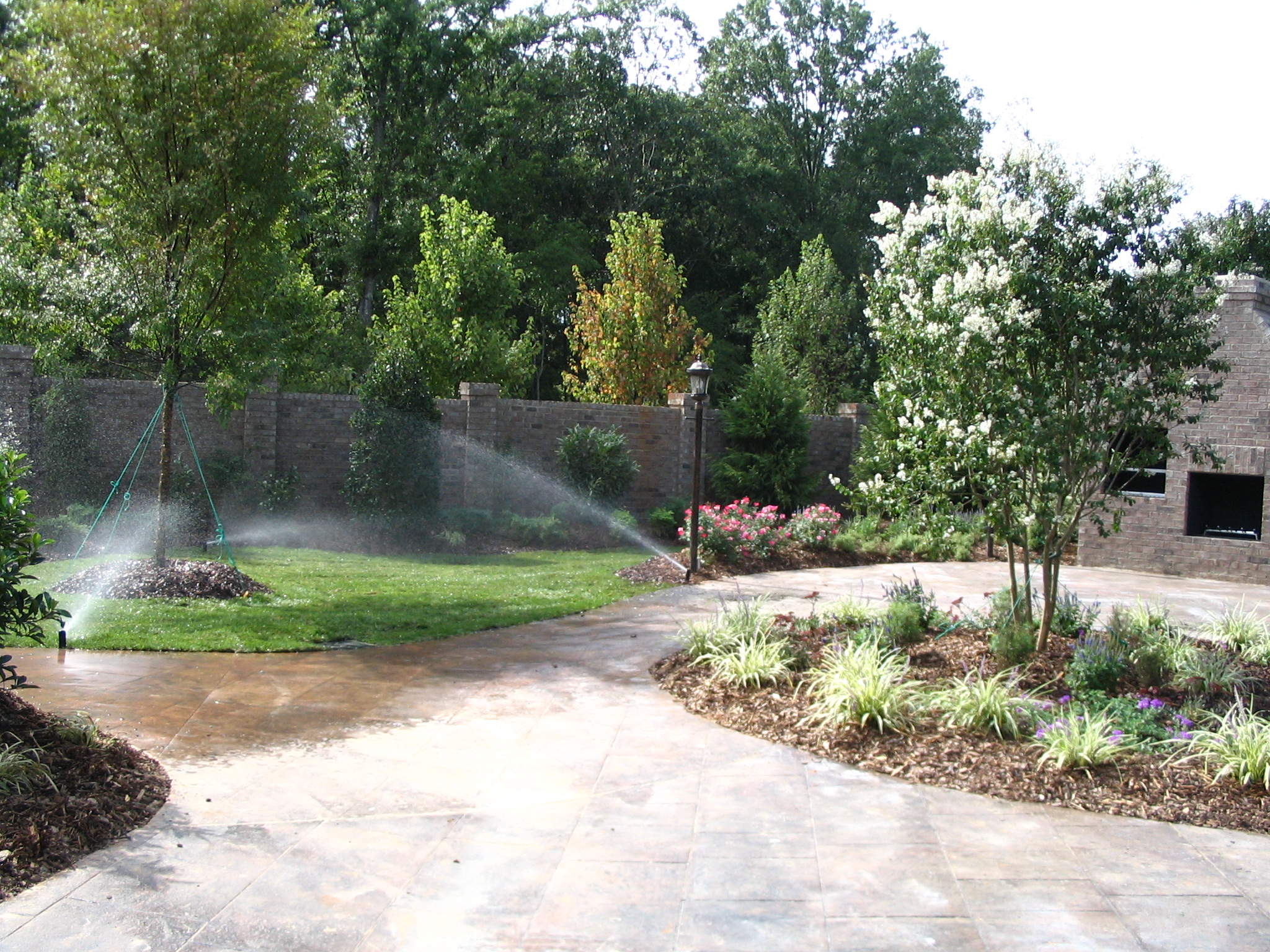
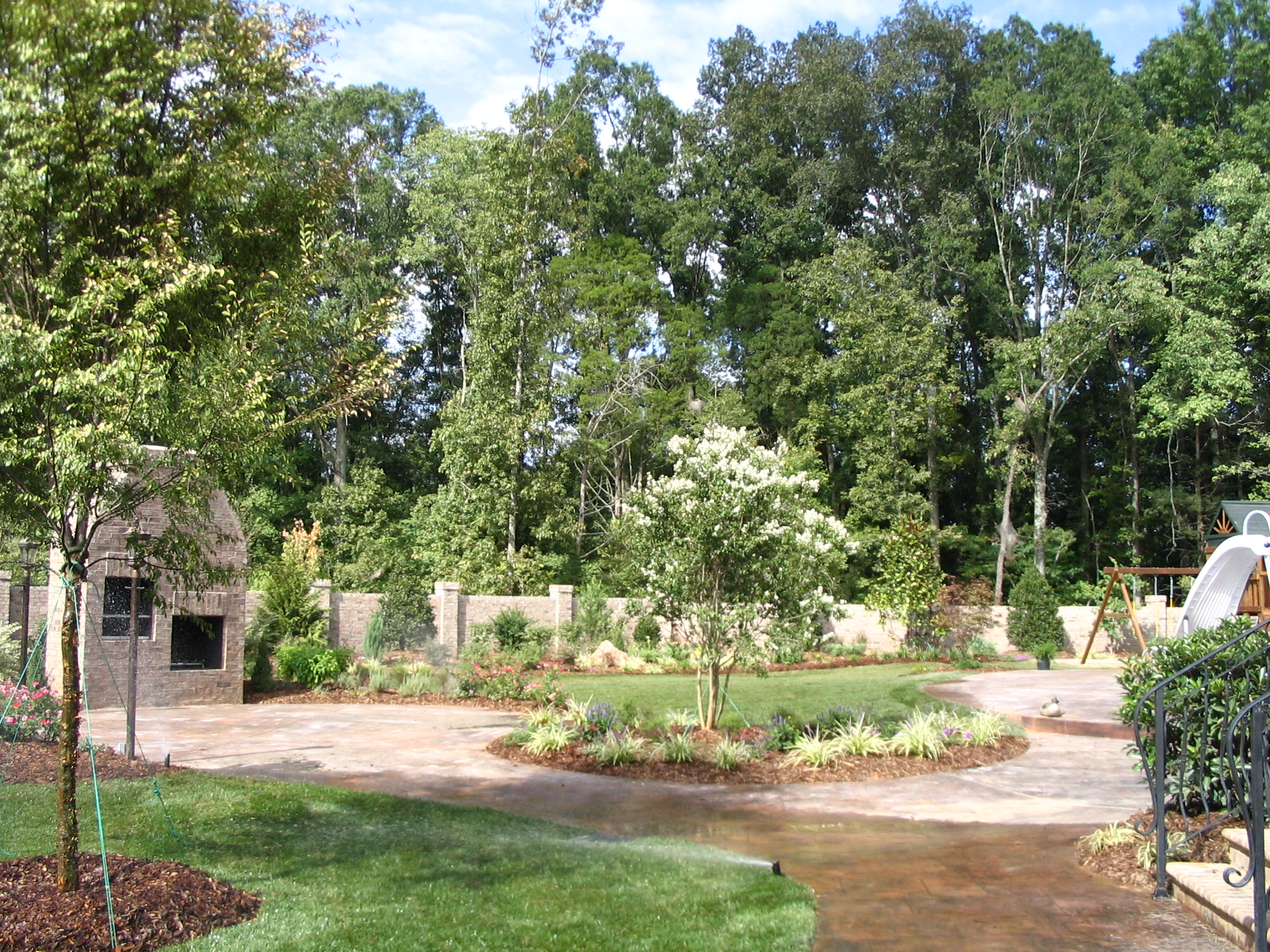
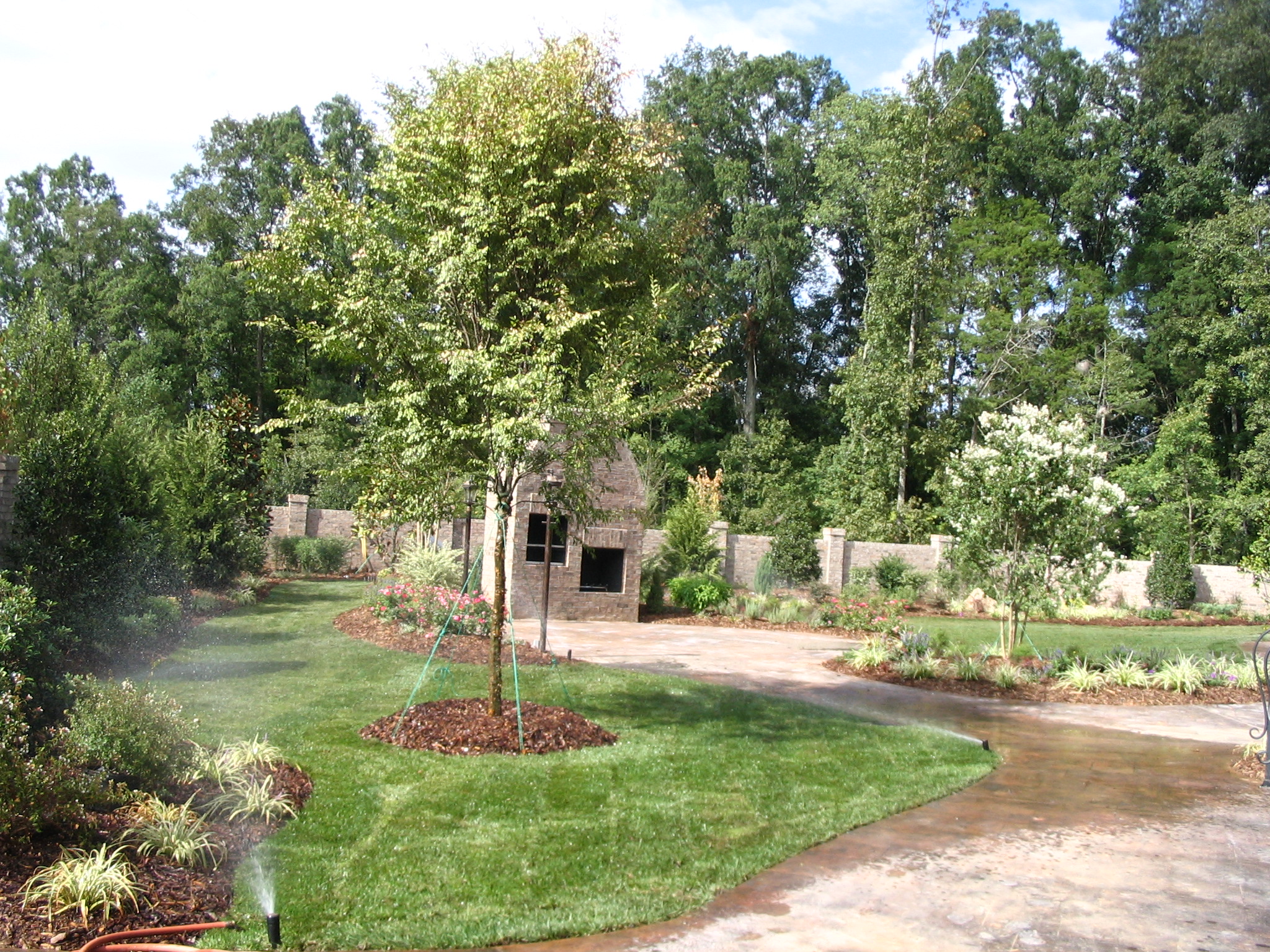
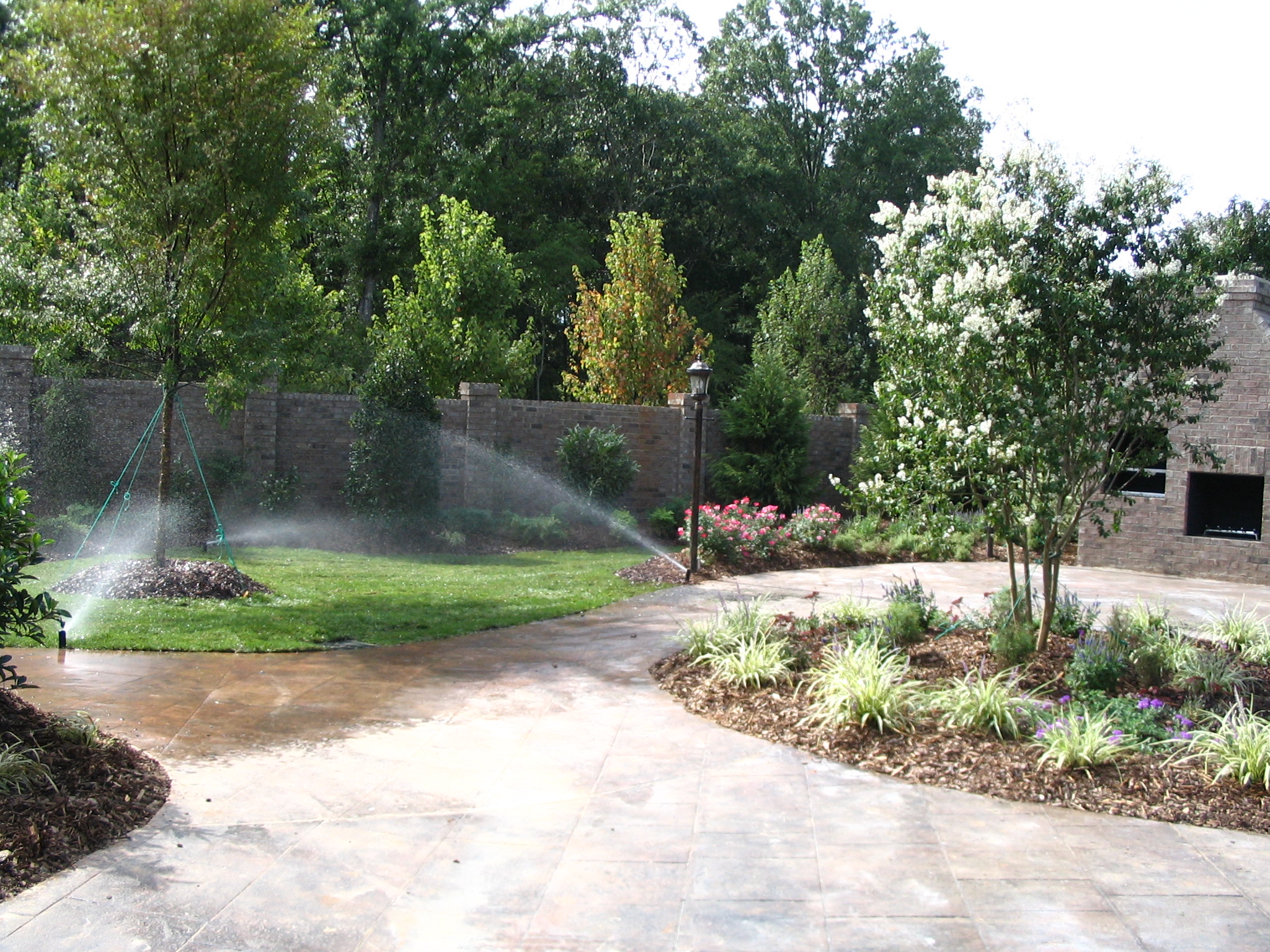
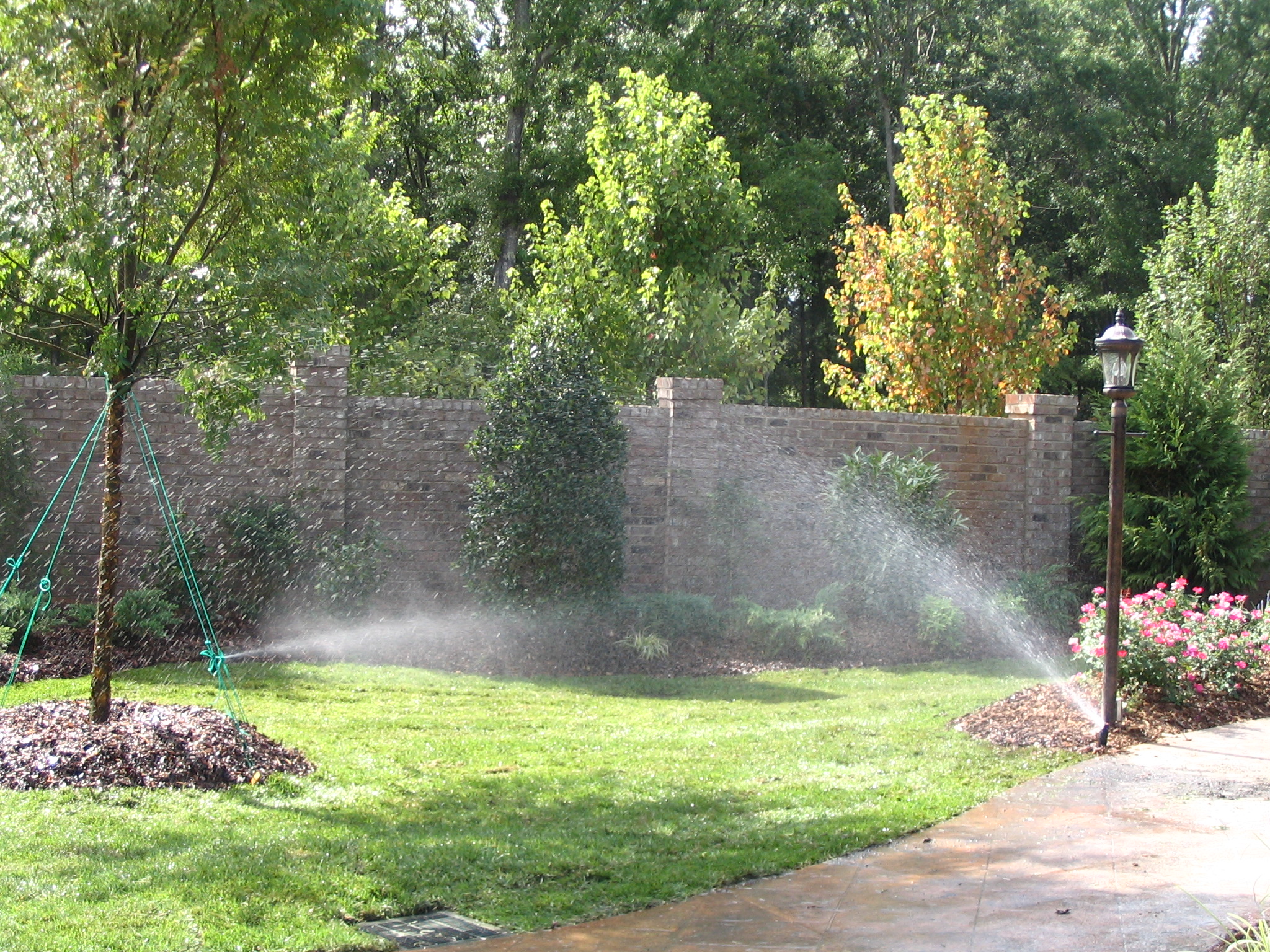
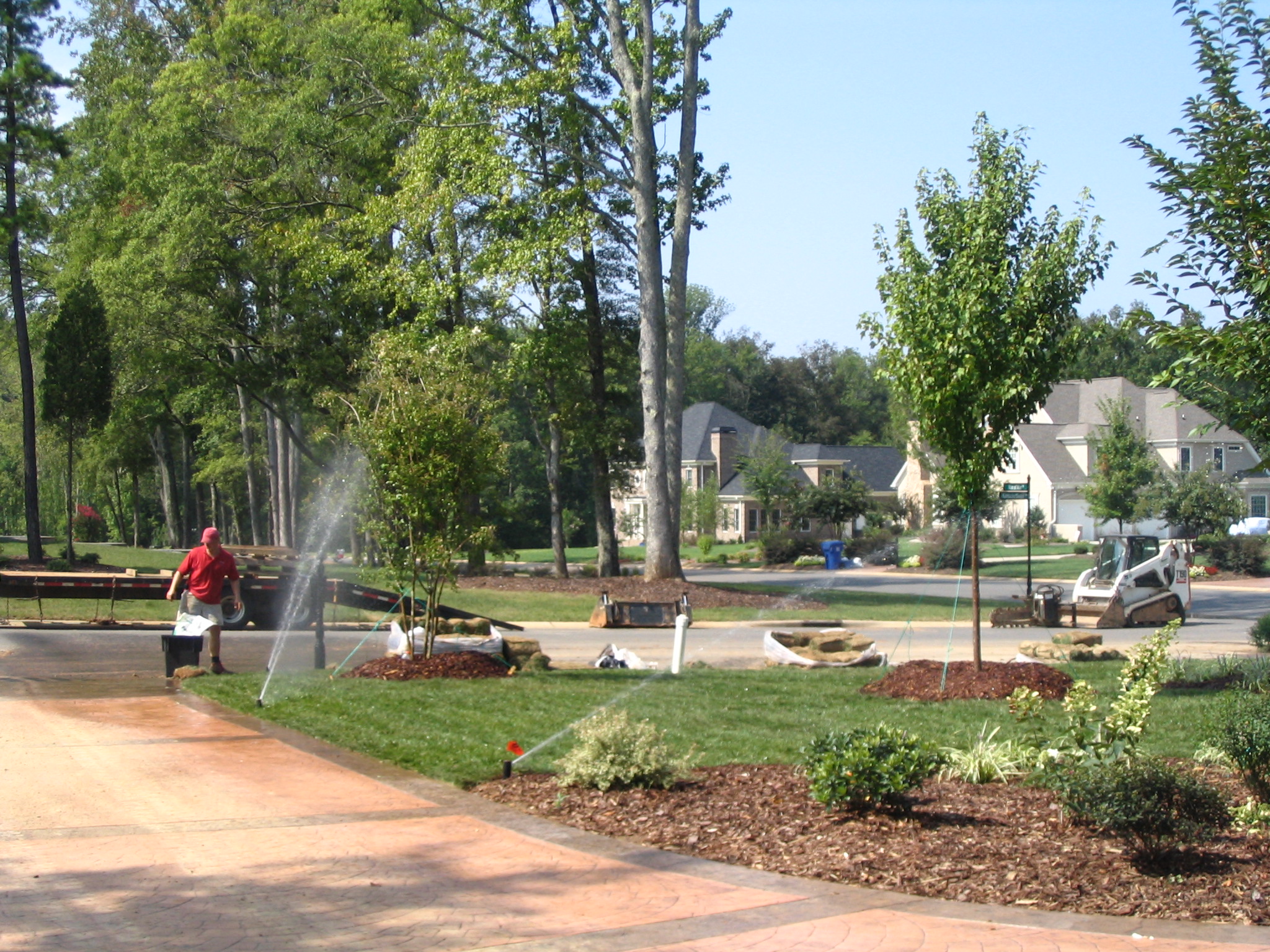
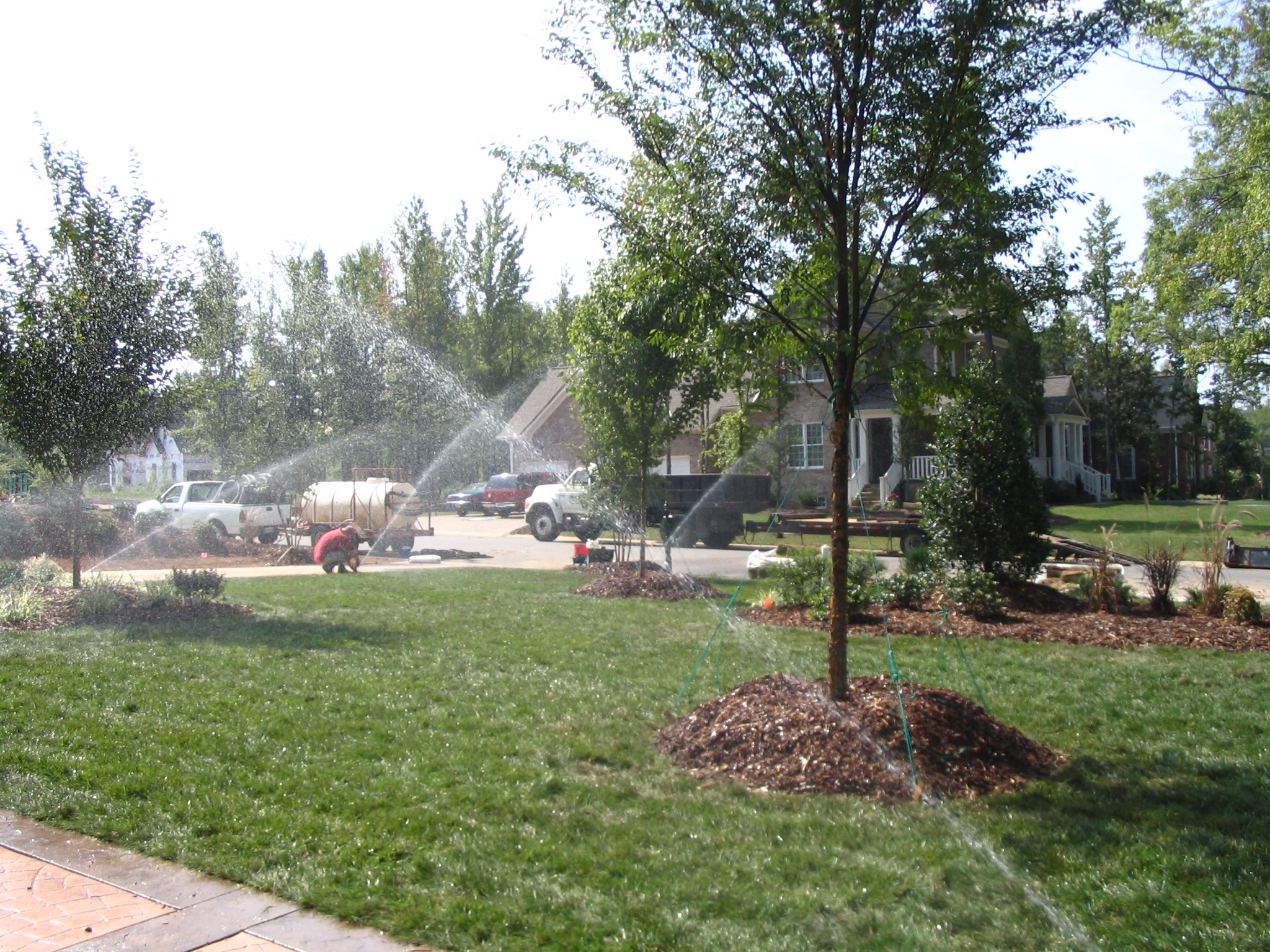
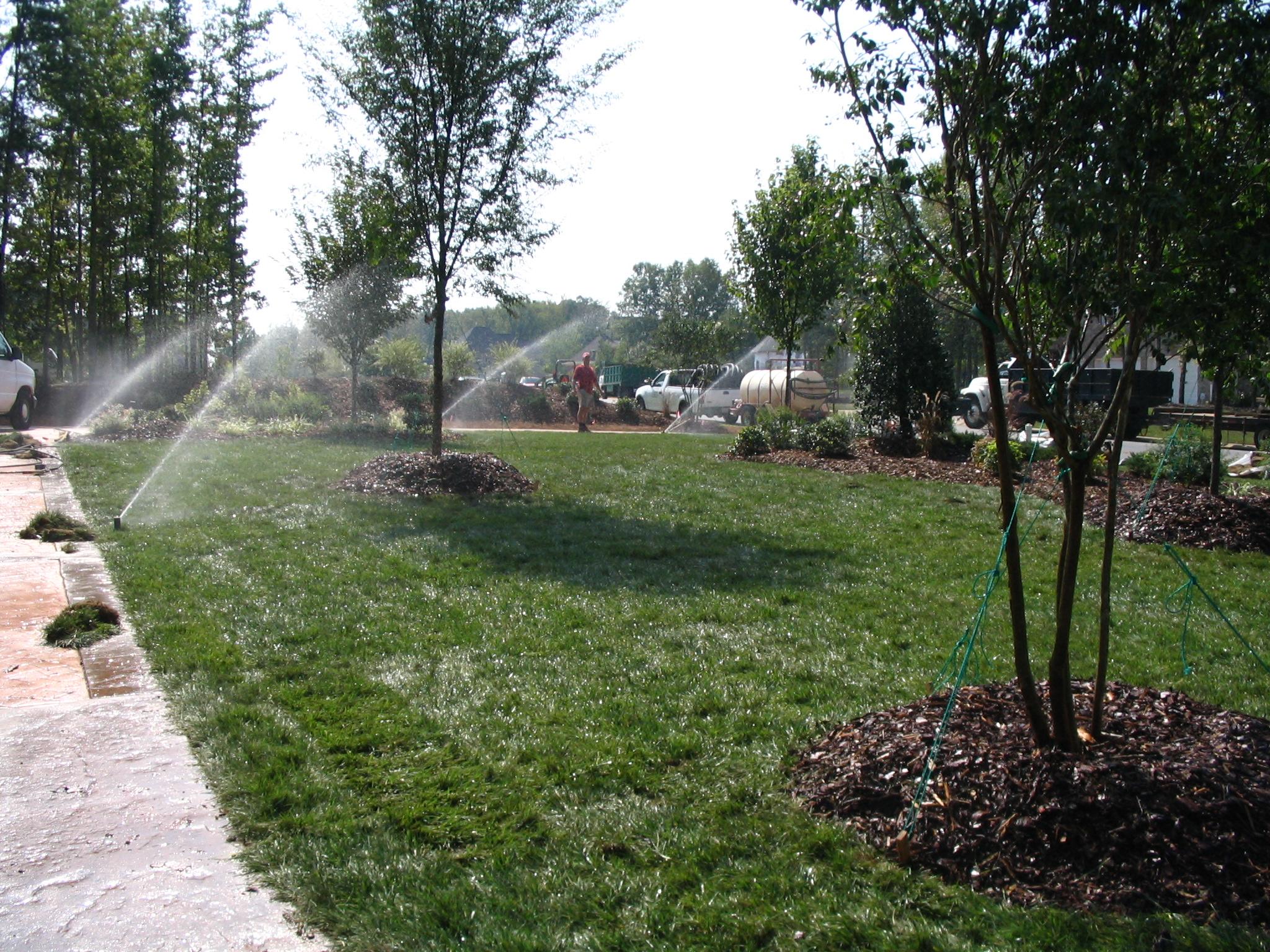
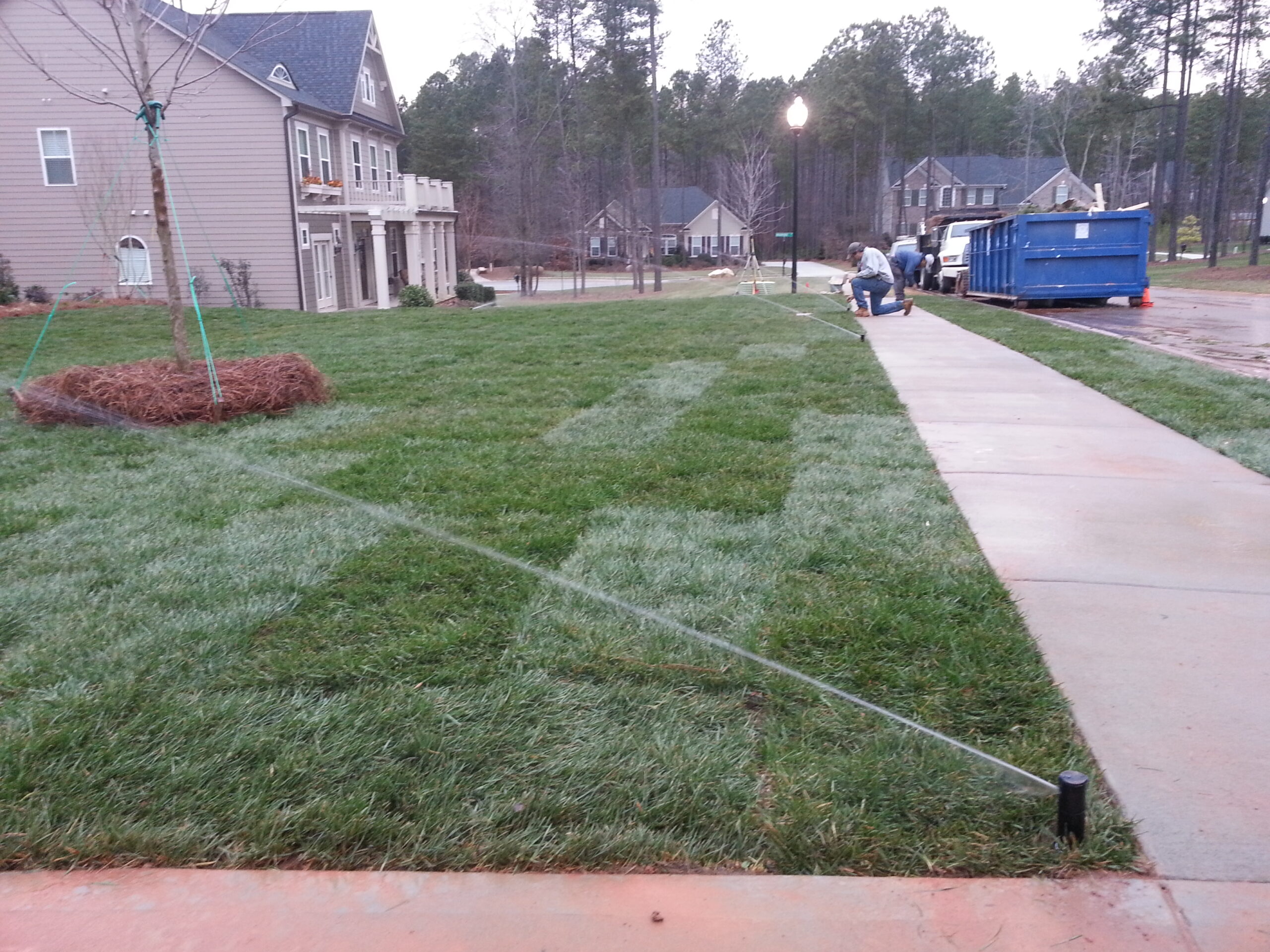
Traditional automatic sprinkler systems offer uniform coverage for large turf areas. Rotors sweep water across open lawn in a slow, rotating pattern, which gives Charlotte’s clay-heavy soil time to absorb moisture instead of shedding it toward the curb. They do the heavy lifting on most properties with real yard space. Spacing matters more than people expect, because the gaps between sprinkler heads are exactly where those pale, stressed patches turn up in July.
-
Turf Spray and Rotary Zones
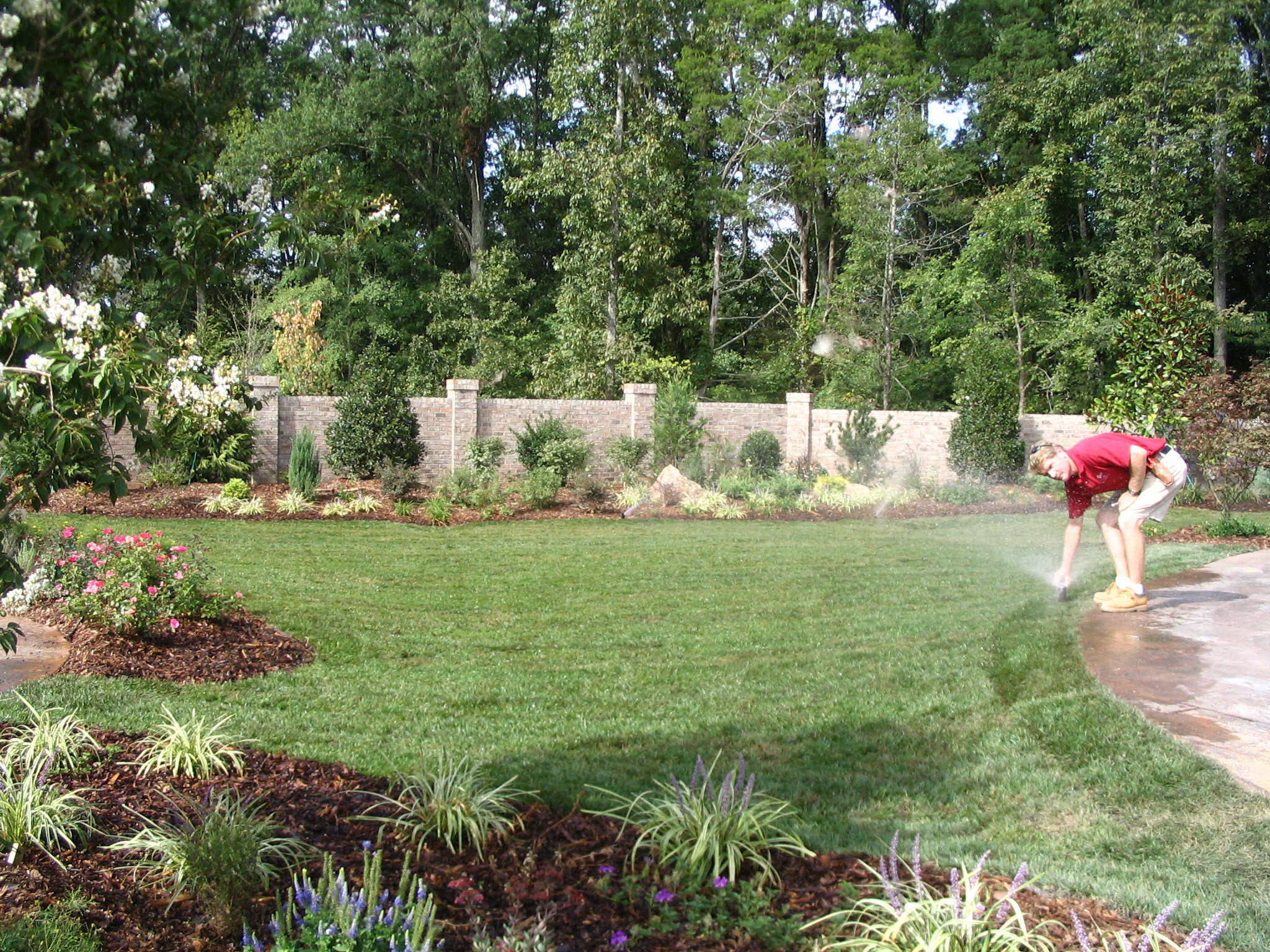
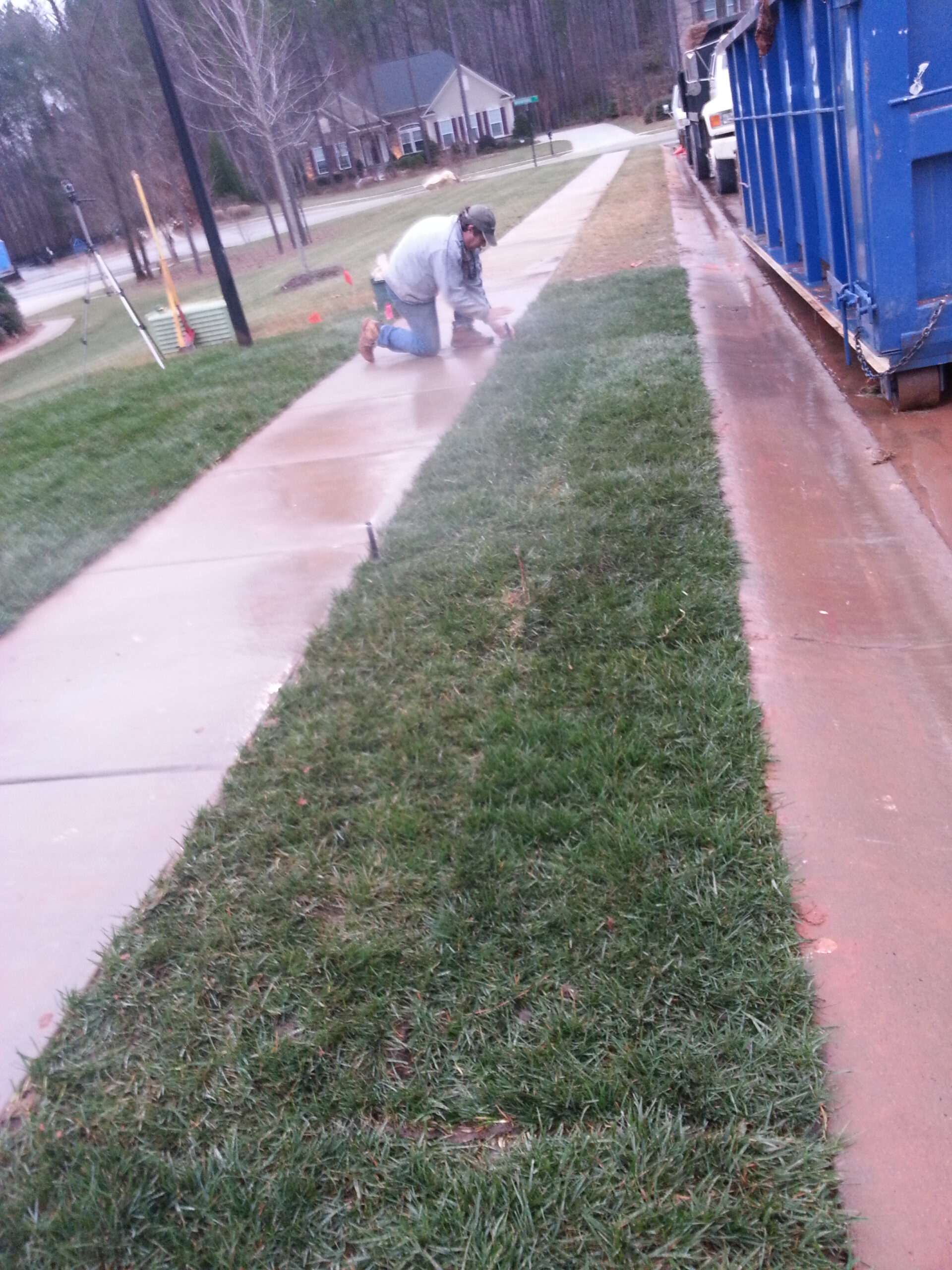
Side yards, narrow strips along a walkway, and smaller front lawn sections need a shorter, more controlled throw. Spray and rotary nozzles cover those areas without soaking the sidewalk or the brick. Getting this right is usually what keeps a front yard looking even from one end to the other instead of patchy in the corners.
-
Drip Zones With Point Source Emitters
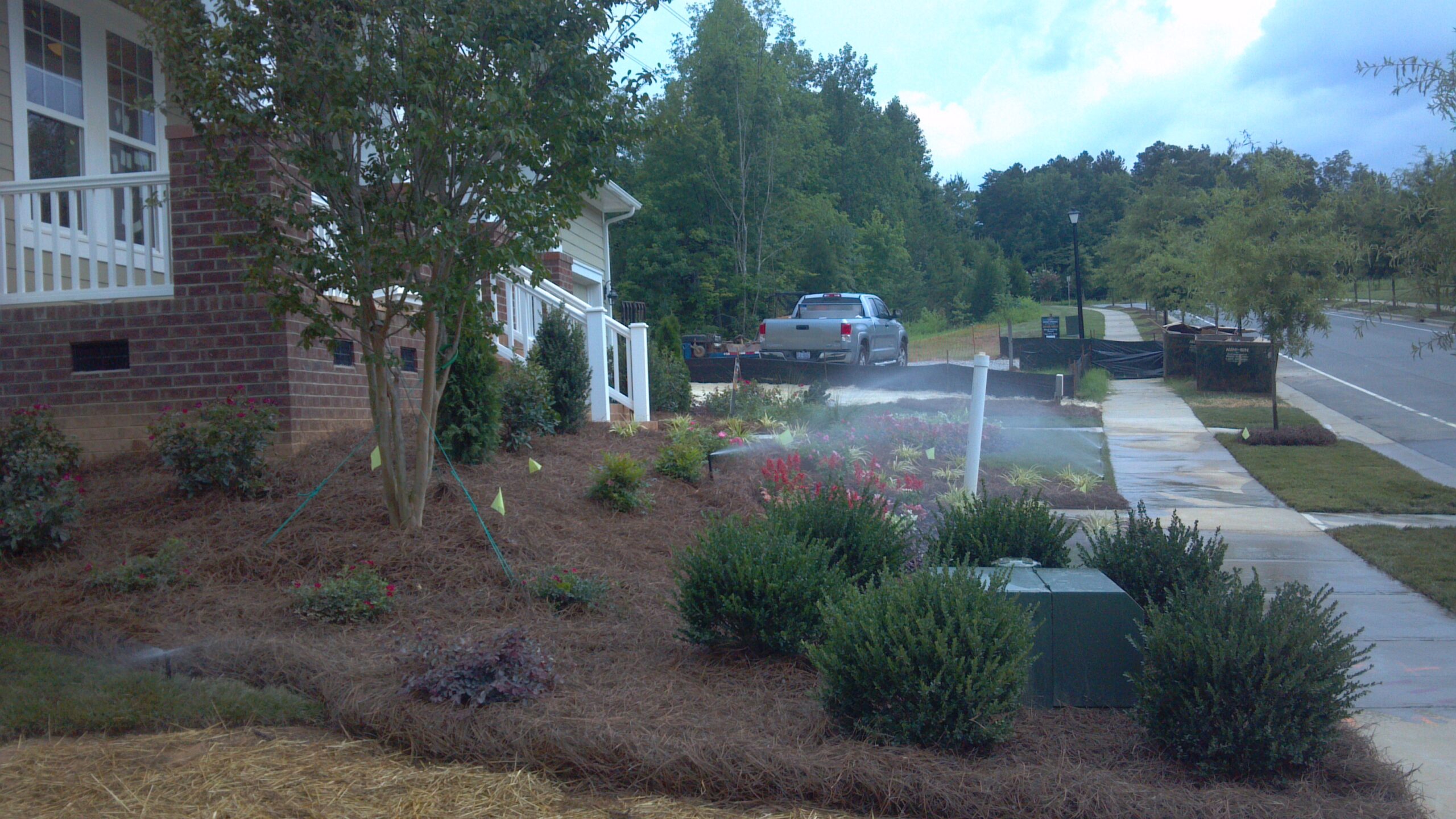
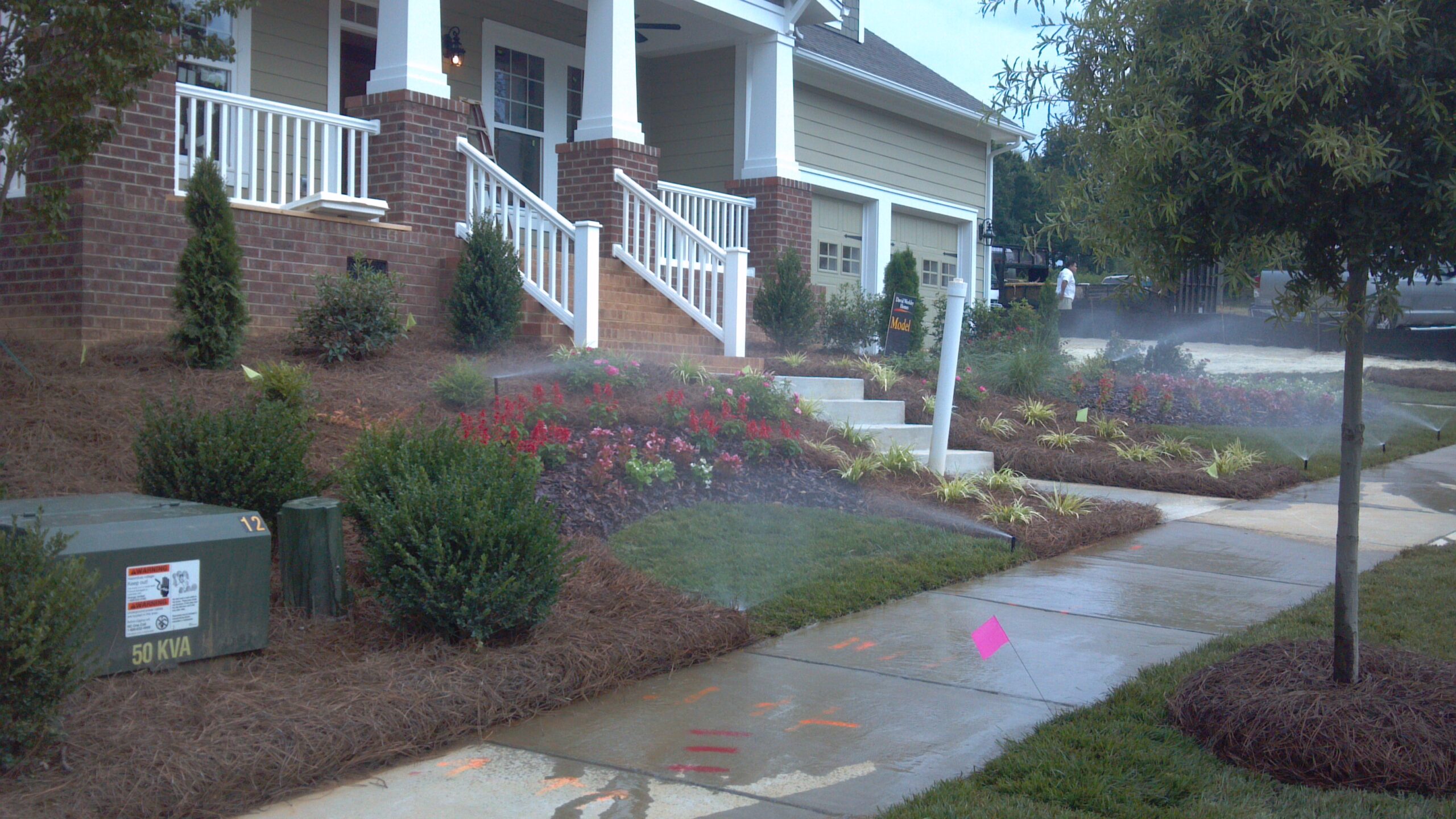
Shrubs, trees, and planting beds do better when water arrives slowly at the root zone rather than getting sprayed across the foliage. Drip delivers water precisely where roots can use it, with very little lost to evaporation or runoff; to that end, it maximizes water efficiency and reduces weed growth. Drip zones also tend to hold up better under Charlotte’s drought restrictions, since low volume root-level watering is treated differently than overhead spraying. If you just paid for a full bed renovation, this is the zone that protects that investment.
-
Smart Irrigation Systems and Accessories
A smart controller adjusts run times using weather data and site conditions instead of a fixed schedule you set once in April and forget about. Rain sensors, soil moisture readings, and local forecast information all factor in. Most current controllers also pair with an app, so you can check zone status, pause a cycle after an unexpected storm, or shut the system down from the airport. More on why that pays off below.
-
Pumps and Backflow Devices
Backflow prevention protects your drinking water and is required, not optional. If your property draws from a well or a pond, we size the pump so pressure holds steady across the entire yard. Uneven pressure between zones is one of the more common problems we find on older systems, and it usually shows up as one section that never quite greens up.
-
System Upgrades and Expansions
Not every project starts from scratch. Plenty of homeowners call us because they added a patio, put in new beds, or built out a backyard seating area and the original layout no longer covers it. Swapping an aging timer for a smart controller, adding zones, or extending coverage to a newly planted section is straightforward work when the existing lines are sound.
Not sure what your property needs? Call (704) 888-5390 and we will walk the yard with you.

Why Smart Controllers Earn Their Keep Here
Charlotte’s humid subtropical climate does not cooperate with a set schedule. We get a week of afternoon storms, then twelve days of nothing, and a traditional timer runs right through both. That is how people end up watering during a downpour and paying for it on the next bill.
Older automatic systems were built around underground PVC lines and a basic clock on the garage wall. They work, and many are still running fine. What they cannot do is react. A smart controller factors in slope, sun exposure, soil conditions, and current weather to decide how long each zone runs. A shaded bed under mature oaks does not need what a full sun front lawn needs, and the controller sorts out that difference without you touching anything.
- Convenience. Set it and leave for the beach without wondering whether the yard survives the week.
- Healthier plants. Zones hold moisture differently. Sensors keep each one in a reasonable range instead of averaging everything into a compromise that suits nothing.
- Remote control. App-based management means adjusting a schedule from the office or the driveway instead of standing in the garage squinting at a keypad.
- Better soil. Constant overwatering flushes nutrients past the root zone, which works against every fertilization treatment and soil amendment you have paid for.
- Less water waste. Skipping cycles after rainfall adds up quickly over a Charlotte summer, and lower consumption shows up directly on the utility bill.
- Seasonal adjustment. As daylight shortens and temperatures fall, run times scale back automatically. Nobody has to remember to change anything in October.
What Parts of Your Landscape Benefit Most
Your yard is a mix of plants with genuinely different needs, and a system that treats all of it the same will leave something struggling.
Lawn areas generally want one to two inches of water per week, more during the hottest stretch. Timing matters as much as volume. Morning watering lets the grass blades dry before the humidity settles in, which reduces the conditions brown patch thrives on. Watering a Charlotte lawn in the evening during August is asking for fungus.
Trees and shrubs prefer a slow trickle at the roots. Plants send roots deeper when water reaches them gradually instead of arriving as a quick overhead soaking that mostly runs off. Newly planted trees especially benefit from drip through their first two summers, which is exactly when they are most likely to be lost.
Beds and seasonal color dry out faster than turf because mulch and bed edges shed water differently. These zones usually need a schedule of their own rather than borrowing the lawn’s.
Areas around patios and outdoor living space need a little extra thought. Nobody wants a rotor soaking the seating area or misting the grill during dinner. We plan head placement and spray direction around how the space actually gets used, and we do the same when we run landscape lighting through those areas.
Call (704) 888-5390 and we will put together a plan built around what is actually growing on your property.

How Irrigation Fits Into the Bigger Picture
Consistent water is the foundation under everything else you do out there. A fertilization program works better on turf that is not fighting drought stress. New plantings establish faster. Sod takes. And a lawn that stays green through the worst weeks of summer does real work for your curb appeal, which matters whether you are planning to sell in two years or just like how the place looks when you pull into the driveway.
Charlotte homeowners tend to invest carefully in their properties, and a well built system protects the money already in the ground. Plants, sod, beds, trees. All of it depends on water arriving reliably.
Your Licensed Irrigation Contractor in Charlotte
North Carolina requires that irrigation systems be installed by a licensed professional, and Charlotte along with its neighboring municipalities has its own rules about connecting to the water meter. Permits, metering, backflow devices, inspection. It is a real process, and the licensing requirement exists for good reason given what a poorly connected system can do to a water supply.
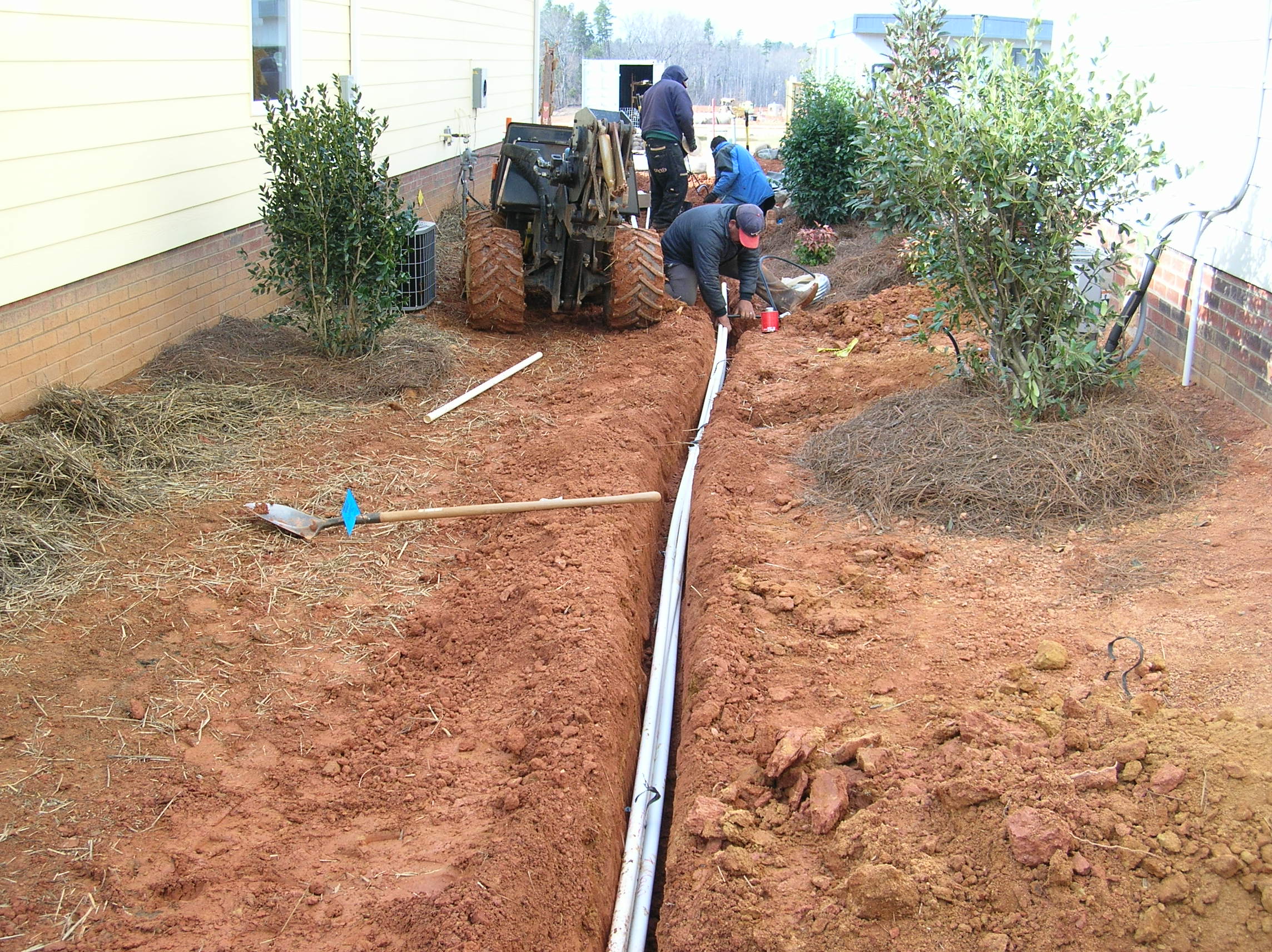
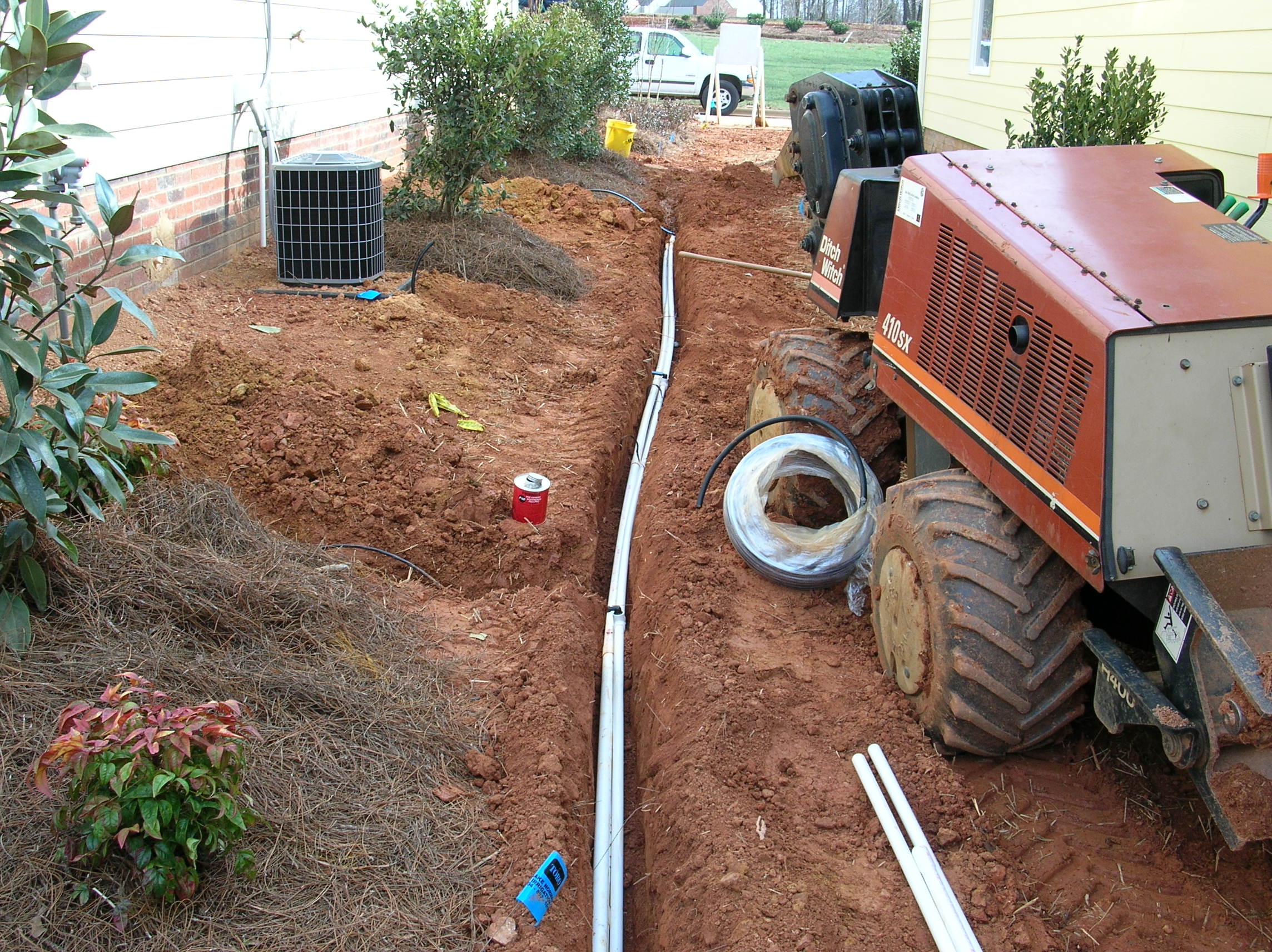
Hyatt Landscaping is a licensed North Carolina Irrigation Contractor, and that paperwork is part of the job we take on. Expert irrigation services come down to three things done properly. Design that accounts for the actual site. Installation that does not cut corners underground where nobody will see it. And a layout that still makes sense five years from now.
We have been family owned and operated since 1980, and the owners are still out on properties. When we recommend how a system should be laid out, that comes from four decades of watching what works in Charlotte soil and what quietly fails three summers later. We also handle landscape lighting, drainage, grading, plantings, and hardscaping, so if irrigation is one piece of a larger plan for the yard, we can look at the whole property with you.
Common Questions About Charlotte Irrigation
Do I need a permit for a new irrigation system in Charlotte?
Usually, yes. Charlotte and the surrounding municipalities regulate connections to the water meter, and North Carolina requires licensed installation. We handle permitting and metering coordination so your system is compliant from day one.
How much water does a well designed system actually use?
Less than most homeowners expect. Zones run only as long as they need to, and rain sensors skip cycles after storms. Poorly designed systems waste water. Properly designed ones typically reduce it compared to hand watering an entire yard.
Can I control my sprinkler system from my phone?
With most current smart controllers, yes. App access lets you pause a cycle, check zone status, or adjust a schedule from anywhere. We will walk you through the setup before we leave the property.
Can you add irrigation to a landscape that is already installed?
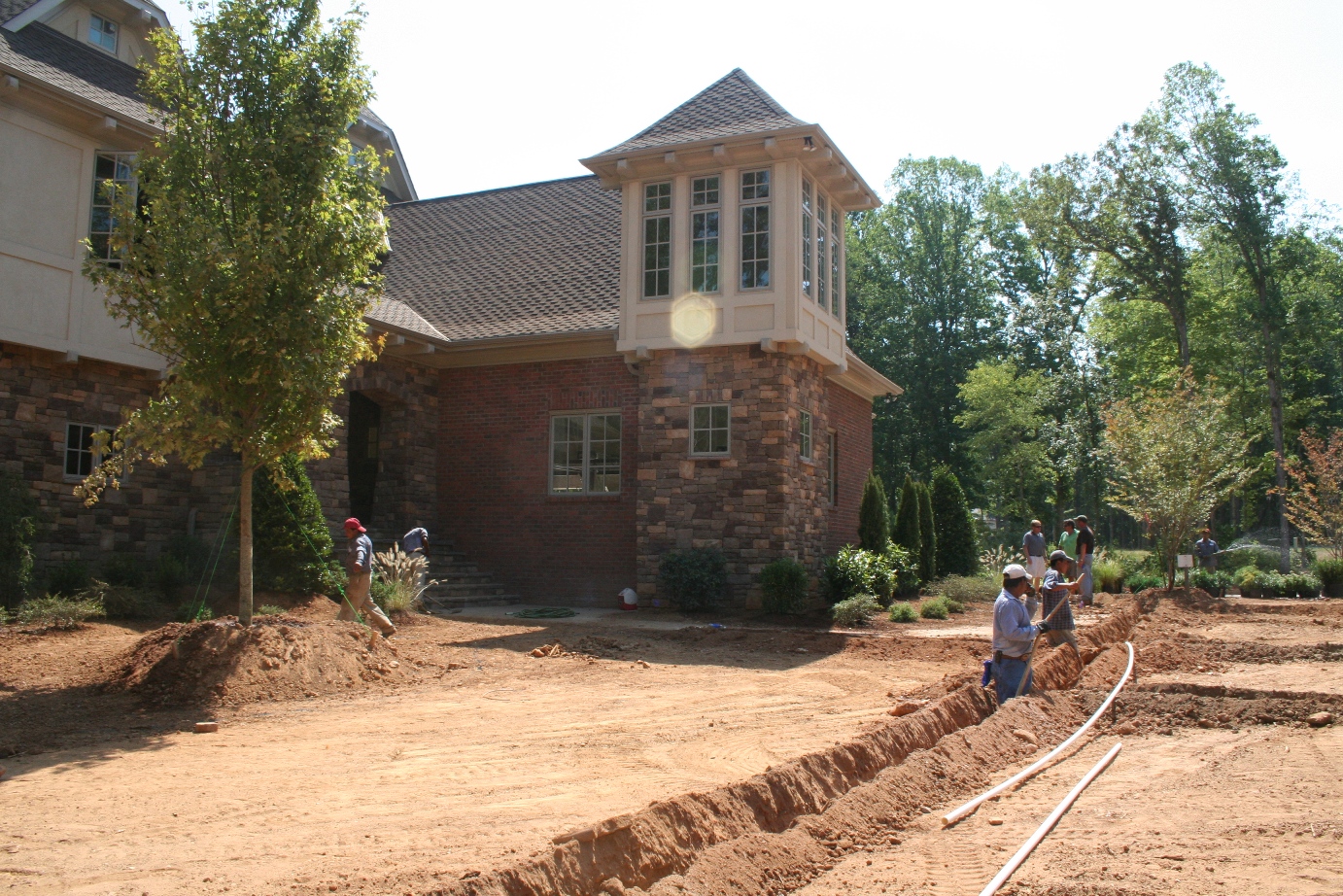
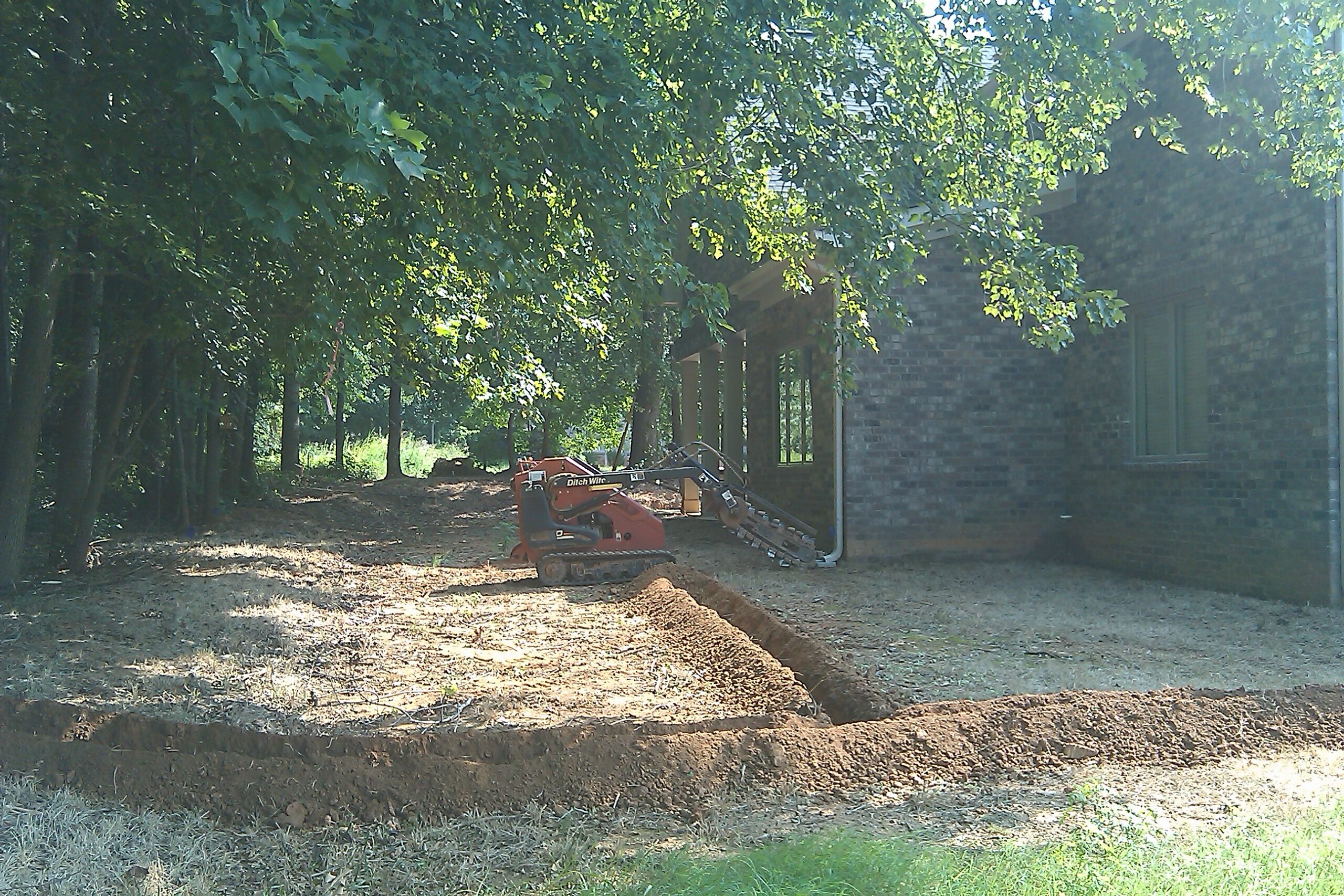
We do this often. Working around established beds and hardscapes takes more care with trenching routes, but it is very manageable. We map the layout around existing plantings before any digging begins.
Does Hyatt Landscaping mow lawns too?
No. We focus on design, installation, and turf treatment programs like fertilization, weed control, and core aeration rather than weekly mowing or routine yard work. Irrigation fits naturally alongside that side of the business.
How long does installation take?
Most residential projects run a few days once permits are in hand, depending on lot size and the number of zones. Larger properties take longer. We give you a realistic timeline up front instead of a best case guess.
What areas do you serve?
We install irrigation systems throughout Charlotte and nearby communities including Matthews, Mint Hill, Weddington, Waxhaw, Indian Trail, and Huntersville. Give us a call to confirm coverage for your neighborhood.
Let's Talk About Your Yard
If you are tired of hauling hoses, guessing at run times, or watching one section of lawn give up every August, a properly designed system puts an end to that for your outdoor space. Hyatt Landscaping has helped Charlotte area families keep their landscapes healthy for more than forty years, and we would be glad to take a look at yours.
Schedule a consultation or call (704) 888-5390 to get started.